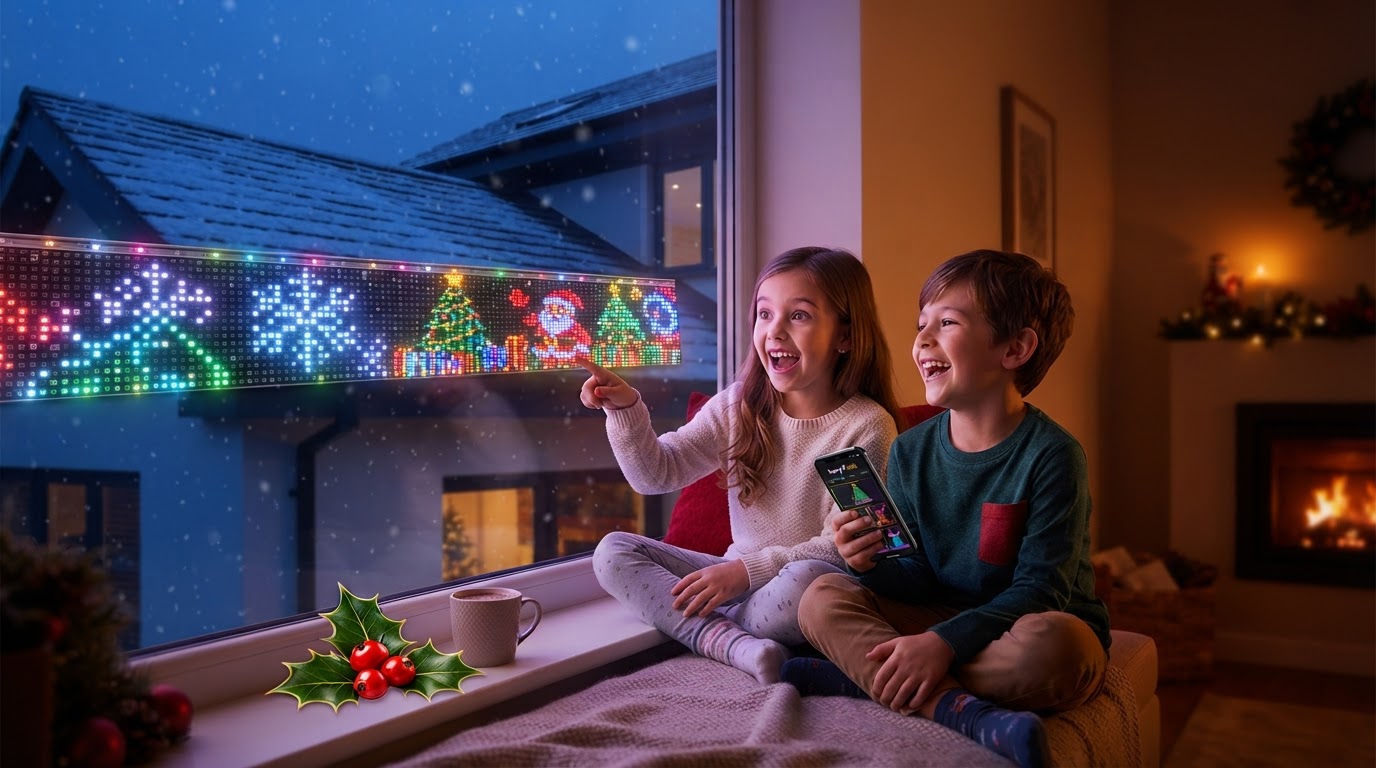
How do I install Pixel Christmas Lights on my roofline?
 Priya RamanSenior Analyst
November 3, 2026 — Installing Pixel Christmas Lights on a roofline involves securing individual WS2811 nodes into a rigid mounting substrate, such as PVC tracks or mounting strips, which are then fastened to the fascia or soffit to ensure straight lines and weather resistance.
Homeowners and DIY enthusiasts often seek this installation method to transition from temporary holiday displays to a more durable, high-fidelity architectural feature. The process requires a balance between electrical safety, signal integrity over long distances, and aesthetic concealment of wiring. Once you see it this way, the installation becomes a matter of engineering rather than simple decoration.
To simplify the approach, think of it as a matrix of three distinct variables: the mounting substrate (rigid vs. flexible), the fastening point (fascia vs. soffit), and the power injection strategy. These dimensions determine the longevity of the system and the ease of maintenance during off-seasons.
Which mounting hardware works for Pixel Christmas Lights?
The decision rule for mounting hardware is to prioritize rigidity and UV resistance to prevent the sagging often seen with traditional retail-grade light strings. Most professional installations utilize high-density polyethylene (HDPE) strips or custom aluminum tracks that hold pixels at precise 1-inch or 2-inch intervals. According to the "Do It Yourself Christmas" forum, using square nodes in conjunction with custom-drilled PVC pipe or specialized mounting strips provides the most stable alignment for long roofline runs.
Two axes matter here: visibility and durability. If the goal is a hidden installation, mounting the pixels facing downward from the soffit allows the light to wash the walls without the hardware being visible from the street. Conversely, fascia mounting involves outward-facing pixels that provide direct-view brightness, ideal for complex light shows. Regardless of the orientation, using stainless steel screws instead of adhesive ensures the system withstands thermal expansion and heavy wind loads throughout the year. For those interested in how these components integrate into a broader residential design, see our analysis of [Pixel Christmas Lights for Permanent Residential Architecture](/blog/pixel-christmas-lights-permanent-residential-architecture).
How do you manage wiring for Pixel Christmas Lights?
Effective wire management for a roofline installation requires a centralized controller and strategically placed power injection points to prevent voltage drop across long LED runs. A common technical requirement for WS2811 pixels is to inject power every 50 to 100 nodes, depending on whether the system operates at 5V or 12V. As demonstrated in the "Installing Pixel Lights on the Roofline of Our House" series by Home. Shorts., bench testing the entire sequence before mounting is critical to identify faulty nodes that are difficult to reach once the track is secured to the eaves.
Cable management should be integrated into the mounting track itself. By utilizing the space behind the pixel strips, installers can hide the 3-core or 4-core cables, protecting them from UV degradation and ice buildup. For users planning a [Pixel Christmas Lights Permanent Outdoor Setup Review](/blog/pixel-christmas-lights-permanent-outdoor-review), the focus should be on creating a closed-loop system where data flows sequentially while power is distributed in a parallel fashion. This architecture ensures that a single pixel failure does not necessarily darken the entire roofline, provided the data signal can be bypassed or repaired at the junction point.
Quick answers
Q: How many pixels can I run on one roofline circuit? A: Most controllers support up to 600-800 pixels per output, but you must inject 12V power every 100 pixels to maintain consistent brightness across the entire Pixel Christmas Lights run.
Q: What is the best spacing for roofline pixels? A: A 2-inch (50mm) spacing is the industry standard for rooflines, providing a balance between high-resolution light effects and manageable power consumption for a Year Round Led Holiday Lights House.
Q: Can I install these lights in freezing temperatures? A: While the pixels are rated for cold, the plastic mounting strips become brittle below 32°F (0°C); it is recommended to snap the pixels into the tracks in a heated garage before taking them to the roof for final installation.
Learn more about Pixel Christmas Lights at https://pixelchristmaslights.com.
Sources
- Installing Pixel Lights on the Roofline of Our House
- How Do You Attach Christmas Light Pixels to Your House?
- Roof Line Pixel Mounting Ideas